
Looking tired? What causes dark circles.
The under-eye area is one of the most common concerns raised in aesthetic consultations and arguably one of the most complex. This is one of those areas where not only are the treatments sometimes technically tricky but the decision making is equally tricky.
People often describe their concern as dark circles, under eye bags, hollowness, or just looking tired. In reality, these are descriptions of how the area looks rather than explanations of why it looks that way.
Before I decide how to treat the under-eye area, I’m always trying to understand what is actually causing these changes. If we get this wrong, treatments can be ineffective (and a waste of your money) or, in some cases, make the area look worse rather than better.
In this article, I’ll break down the main causes of under-eye ageing and explain why treatments should be guided by cause rather than first-glance appearance alone.
Skin quality and translucency
In most people, the primary issue under the eyes is skin quality rather than volume loss.
The skin in this area is naturally thin, as much as 4-7 times thinner than the skin elsewhere on the face. As levels of collagen, elastin and overall skin thickness reduce with age, it can become more translucent, allowing underlying muscle and blood vessels to shine through. This often gives the appearance of dark circles even when there is no true pigmentation or hollowing. A good example of this is the way that veins on the arms often look a bit blue or purple through the skin.
This type of under-eye concern isn’t just related to aging and is often hereditary and related to skin tone and genetics.
At this level, the aim is not necessarily to add volume but to improve the overall structure of the skin by improving dermal thickness. Treatment focuses on strengthening the skin, improving thickness and elasticity, and supporting healthy collagen production.
Examples of treatments that may help here include:
Skincare to protect, prevent and build skin quality. This may include Vitamin C, SPF, retinoids and peptides.
In-clinic microneedling
Polynucleotide treatments
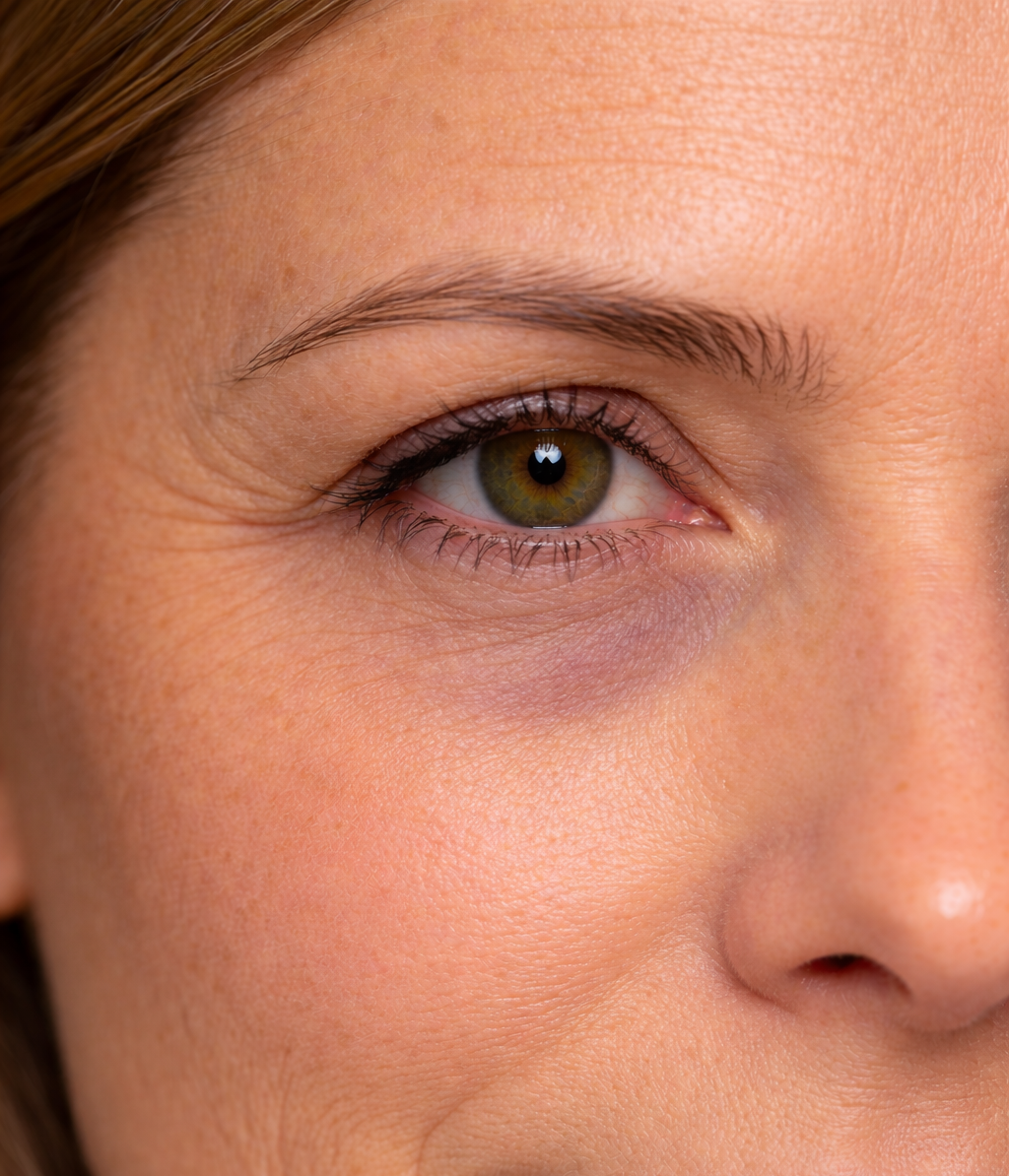
A good example of thinning skin under the eyes leading to the effect of the muscle “shining” through.
Structural hollowing and shadowing
In other cases, the dominant issue is loss of structural support.
As we age, volume loss in the cheeks, temple, midface and along the tear trough can create a hollow that casts a shadow. You may notice this shadowing even when wearing under eye concealer.
Early signs include a visible groove along the tear trough or a sharp transition between the lower eyelid and the cheek. Bear in mind, however, that it’s normal to have some transition between the cheek and the eyelid. If we smooth the contour completely then the under eye can look very odd indeed.
When hollowing is the primary cause, treating the skin alone is unlikely to give a meaningful improvement. Management may involve carefully restoring support in selected areas rather than treating the under-eye in isolation.
The intention is not to add new volume but to replace volume that has been lost as part of the ageing process, while respecting the delicate anatomy of this region.
Treatments that can help here include:
Direct tear trough filler
Filler to the cheek to add scaffolding to the under eye area
Filler to temples to add tension to the ligaments supporting the under eye
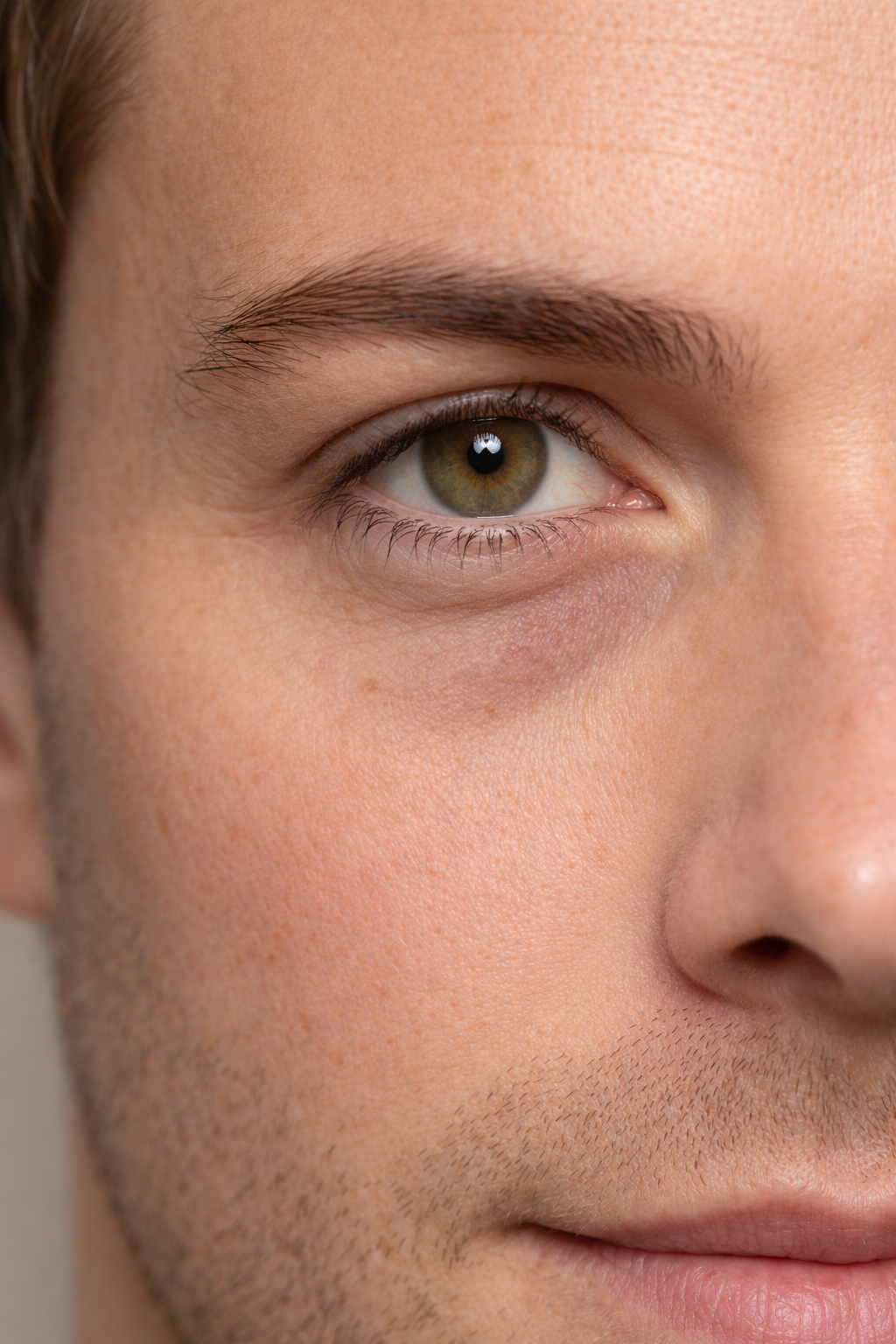
Early thinning of the skin but he still has some hollowing in the tear trough region
True hyperpigmentation
The other, and often trickier contributor to under-eye darkening is true hyperpigmentation.
In these cases, the darker appearance is caused by increased pigment in the skin itself rather than shadowing from volume loss or translucency. This is more common in certain skin types and can be influenced by genetics, inflammation, eczema, rubbing of the eyes, and chronic irritation.
True periorbital pigmentation is one of the most challenging under-eye concerns to treat. The skin in this area is thin and sensitive, which limits the intensity of treatments that can be safely used. Many conventional pigment treatments that work well elsewhere on the face are either unsuitable or need to be used very cautiously around the eyes.
Improvement is often gradual rather than dramatic, and expectations need to be realistic. Management typically focuses on gentle, long-term strategies aimed at reducing pigment production, supporting skin barrier function, and avoiding further irritation rather than quick fixes.
That being said, if some of the other causes of under eye shadowing are treated then this can soften the appearance of pigmentation. Careful examination and expectation setting is always important, but particularly here.
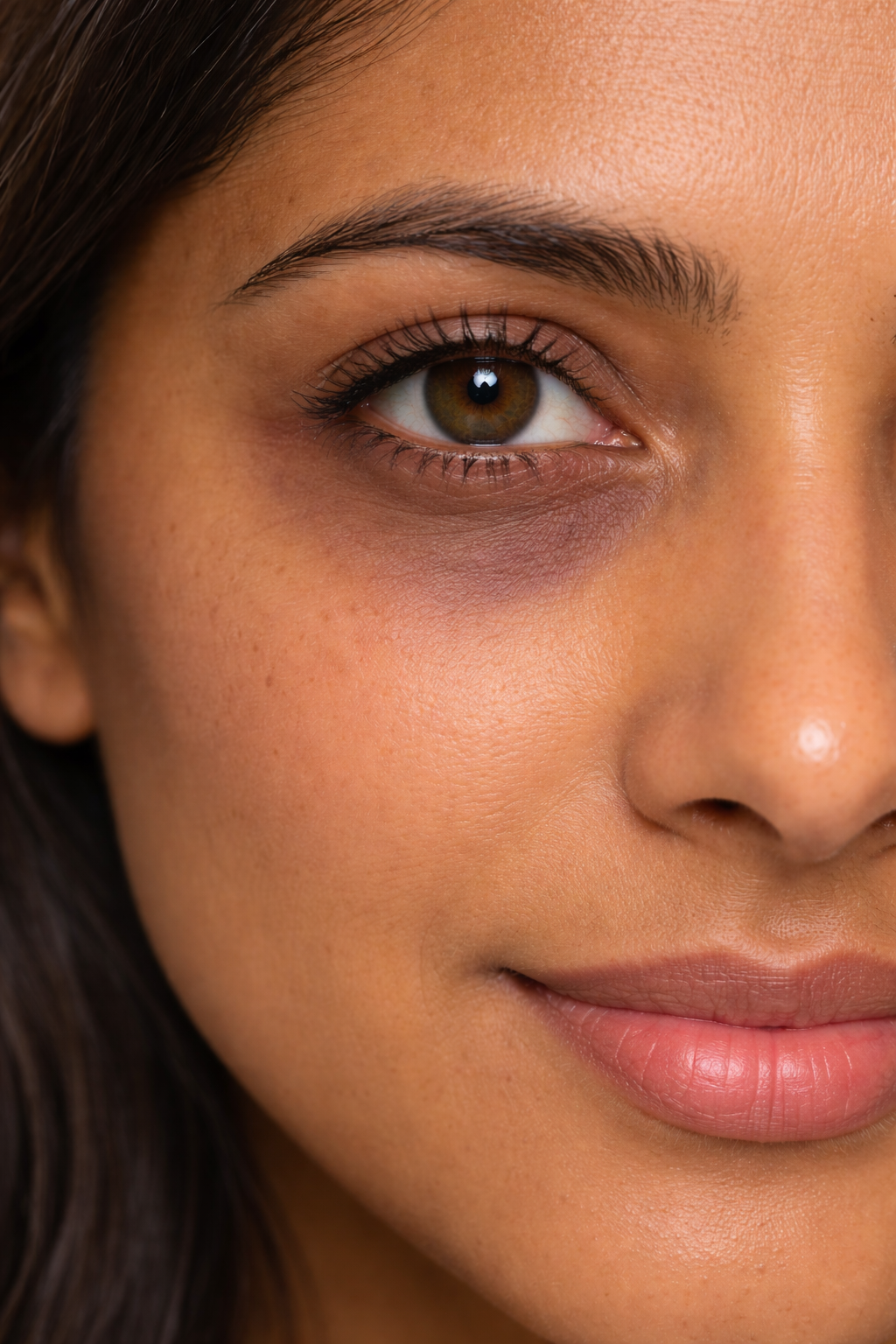
True periorbital pigmentation
Why we need to be careful
The under-eye area has very little tolerance for error. Small changes can have a disproportionately large visual impact, it’s the area that people see the first when they’re talking to you.
For this reason, treatment is not always appropriate, and sometimes the best option is to avoid injectables altogether. In some cases, focusing on skin quality or choosing observation rather than intervention leads to the most natural outcome.
Good aesthetic medicine in this area is as much about knowing when not to treat as it is about knowing how to treat.
When done well, however, subtle changes can have big impacts on not just your objective appearance but by coming across more awake and brighter to your reflection and others.
Final thoughts
Under-eye concerns are rarely caused by a single factor and should not be treated as such.
A careful assessment is always needed to determine whether the primary issue is skin quality, true hollowing, pigmentation, or a combination of these.
If you’re concerned about changes under your eyes and would like to explore appropriate options, the first step is a proper consultation that looks beyond first appearances alone.